Children who are slow to start talking often understand far more than they can say. Many are strong visual learners — they make sense of the world through what they see, long before words come out. This isn't a problem to fix. It's a strength to build on — and when we teach in a way that matches how they learn, words start to come.
This article explains the science behind visual learning and how parents can use it at home to help their child start talking sooner.
Why Visual Learning Speeds Up Talking
When a child is still building spoken language, words on their own can move too fast to hold on to. Pictures slow things down and give meaning something to attach to. Pairing a word with a clear, concrete image lets the brain link the sound to what it means — and that link is what turns understanding into speaking.
This means when we only talk to a late-talking child without anything to see, a lot gets lost. But when we pair words with real, relevant pictures, comprehension jumps dramatically — and understanding always comes before speaking.
Core Principles of Visual Language Learning
1. Real-Life Pictures vs Cartoons
This is a difference many people miss. Cartoon images are abstract — they're artistic interpretations of something. Real-life images are concrete — they're true representations of the object.
For a child who is still learning to connect words with meaning, real-life images give a more accurate and reliable reference point than a cartoon ever could.
💡 MyBicara is built on this principle — all 5,000+ images are real-life photos, not cartoons. This isn't accidental — it's a deliberate design choice grounded in language development research.
2. Visual Sequencing
Children often understand the world better when things are presented in clear, predictable sequences. Visual schedules, story cards, and step-by-step activities help them grasp new ideas through concrete visual structure — which lowers frustration and makes room for words.
3. Visual Reinforcement
When a child uses the right word and immediately sees the related picture, the brain builds a strong link between the sound and its meaning. This works far better than verbal reinforcement alone.
Visual Learning Strategies You Can Do at Home
Picture Cards
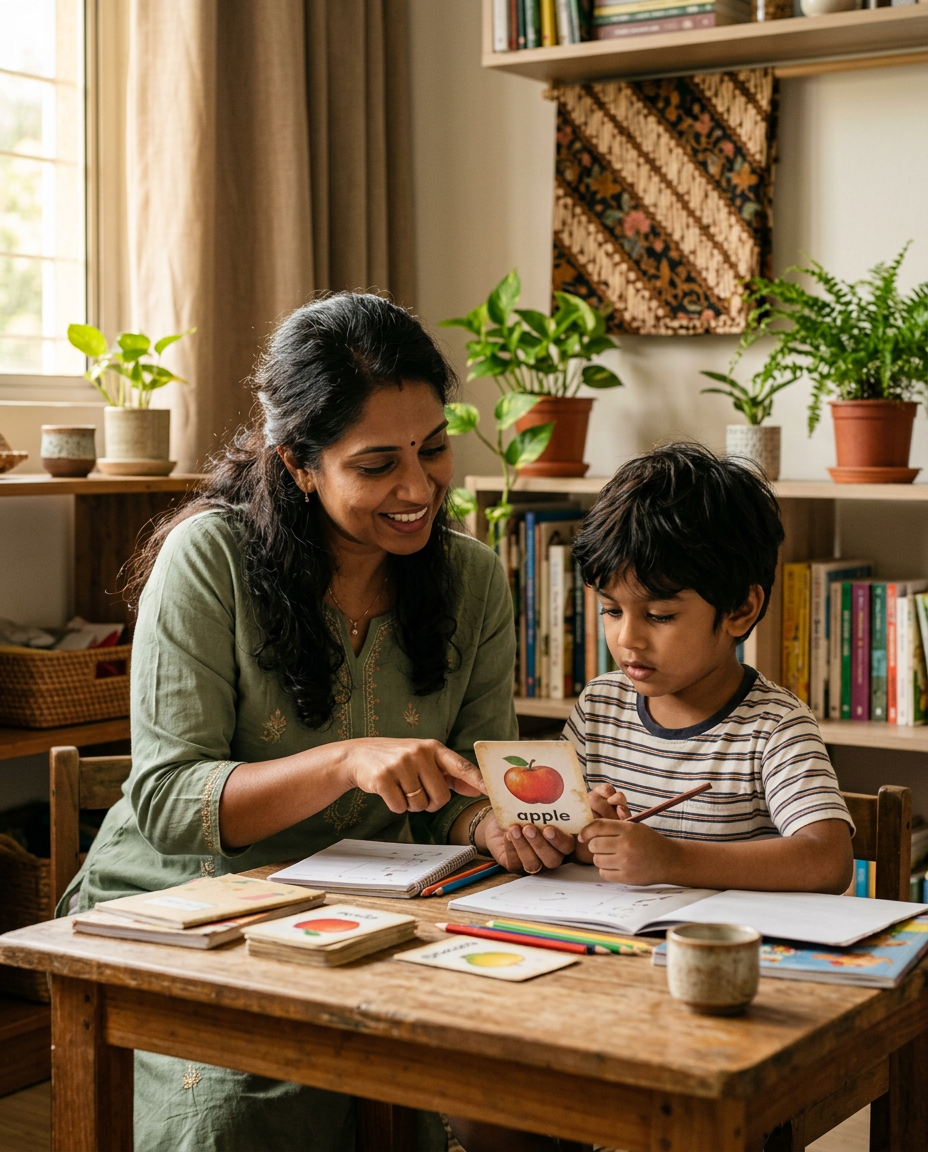
Use real photos — not cartoons — to teach new words. Hold the card, say the word clearly, and let your child touch or point at it. Repeat with enthusiasm each time.
Personal Photo Books
Create a photo book using family pictures, toys, and places your child knows. Name the people and things in the pictures. Personal context boosts motivation and memory.
Naturalistic Videos
Real-life videos — a child playing, someone eating, animals moving — provide rich context for understanding words in action. This works far better than animated videos.
Visual Labels Around the House
Stick labels (image + word) on objects around the home — door, table, chair, fridge. Every time your child passes, you can point and name. This passive visual immersion gradually builds vocabulary.
What Does the Research Say?
Research on early language development consistently finds that visual-based approaches have a positive effect on how children communicate, including improvements in:
- Number of words used spontaneously
- Communication initiation (not just response)
- Understanding of verbal instructions
- Reduction in frustration-related behaviour around communication
💡 A gentle note: if you're ever worried about your child's speech, it's always worth talking to your doctor or a language professional. Visual learning at home works beautifully alongside any support your child is already getting.
The Bottom Line
A late-talking child isn't a child who can't learn language — it's a child who's getting there on their own timeline. When we understand how they learn best and give them the right tools, there's no limit to how far they can go.
Visual learning isn't a “shortcut” — it's the approach that most respects how a child's brain actually works.
Designed for How Your Child's Brain Works
MyBicara uses 5,000+ real-life photos and videos in a structured 5-Phase program — built specifically for Malaysian children, including those who are slow to start talking.
Start 7-Day Free Trial →